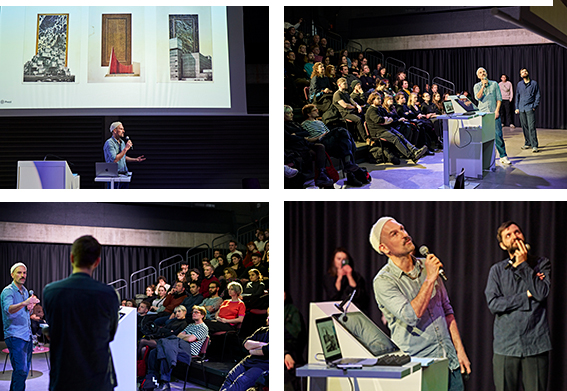
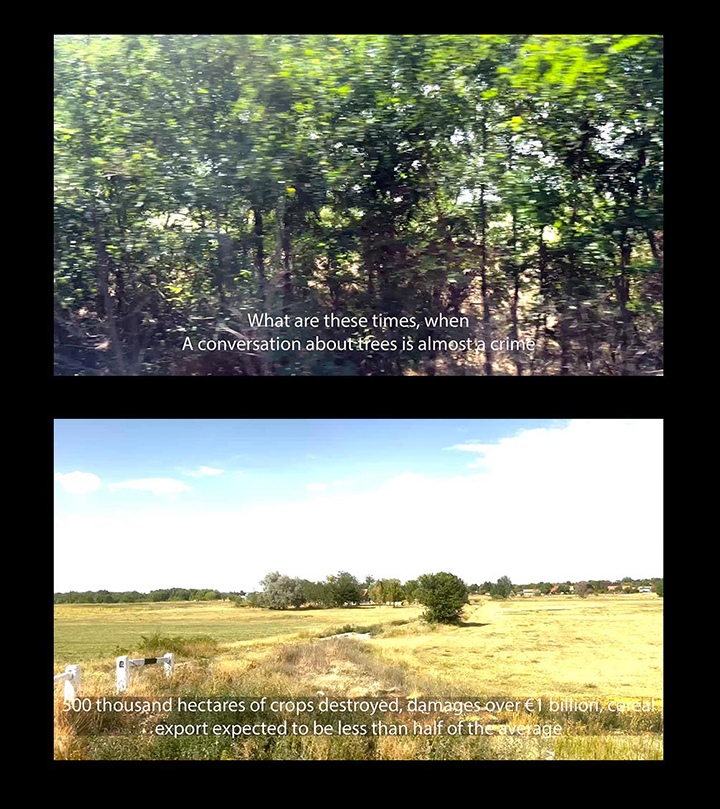
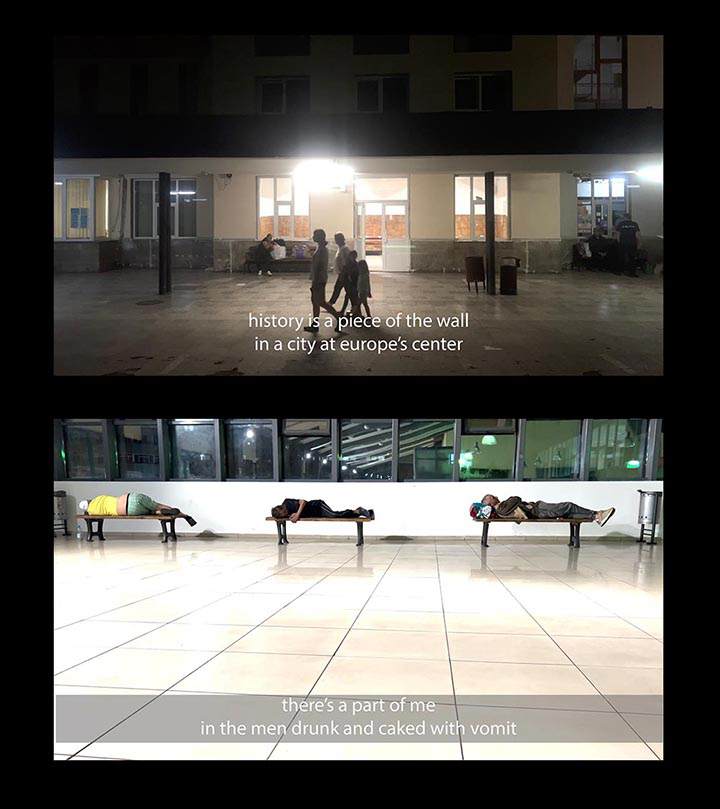
IMAGINE THE FUTURE, Artisterium, Tbilisi, Georgia
3rd Tbilisi international art exhibition
opening: October 02 2010
October 03 - 10 2010
ARTISTERIUM
3rd Tbilisi international art exhibition
opening: October 02 2010
October 03 - 10 2010
ARTISTERIUM
presentation of collages and sculptures at Verein zur Förderung von Kunst und Kultur in the L40 building at Rosa-Luxemburg-Platz.
July 21 - August 31 2010
by appointment only
L40
VEREIN ZUR FÖRDERUNG VON KUNST UND KULTUR AM ROSA-LUXEMBURG-PLATZ
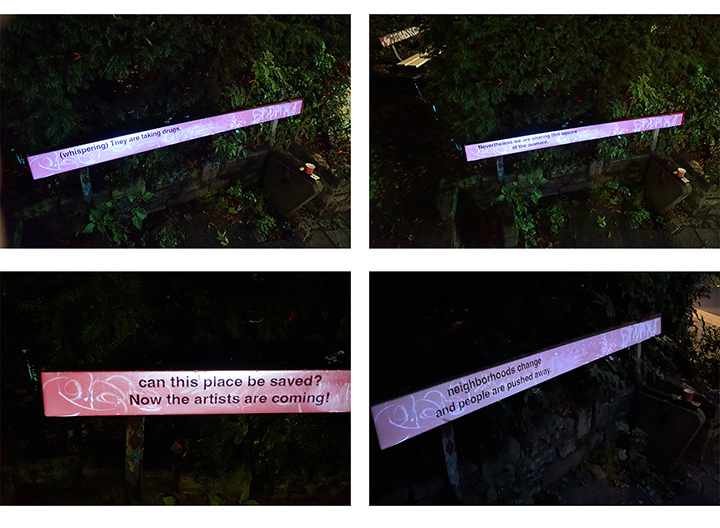
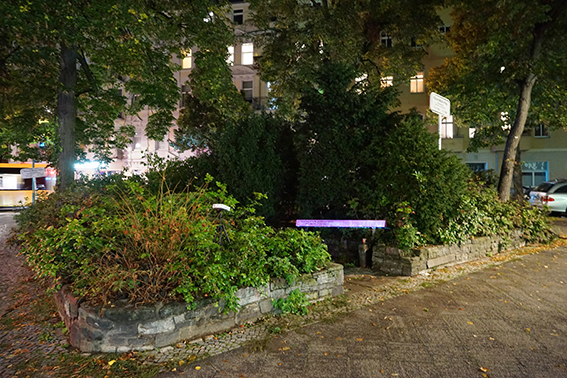
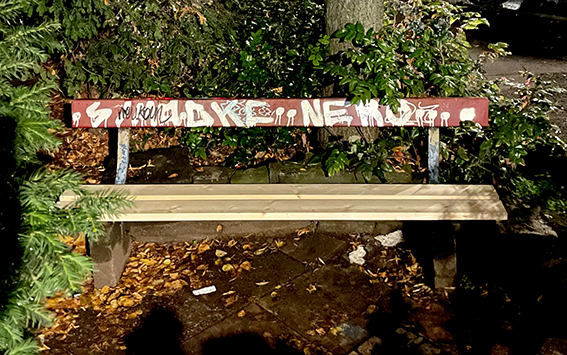
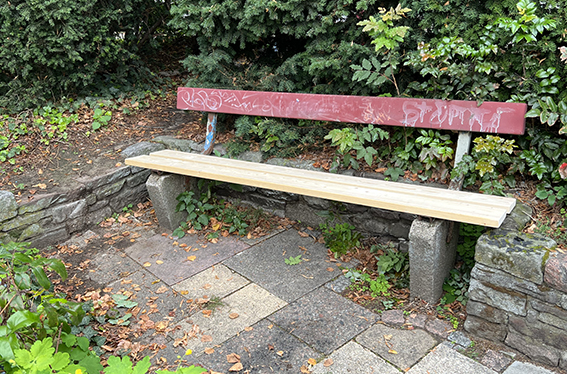
temporary intervention at Rosa-Luxemburg-Platz, Berlin
a cooperation between Galerie Lena Brüning and Verein zur Förderung von Kunst und Kultur am Rosa-Luxemburg-Platz
opening: May 2 at 5:30pm
the installation can be seen until September 2010
LENA BRÜNING
VEREIN ZUR FÖRDERUNG VON KUNST UND KULTUR AM ROSA-LUXEMBURG-PLATZ
solo exhibition
December 12, 2009 - January 30, 2010
A publication with an essay by Jule Reuter is available.
photos: Henning Moser
press release:
Bernd Trasberger often confronts in his works the changes that took place in urban design in divided post-war Germany. This is again the case with his second solo show, “Stunde Null” (Zero Hour), at Galerie Lena Brüning.
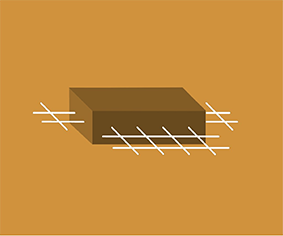
The gallery space, a perfect cube, is completely and seamlessly covered, including floor and ceiling, by the thin lines of a black pattern on a white background. This pattern is a reference to the collages of the Italian group Superstudio from the 1971 series La Vita / Supersuperficie. In that series, the surface of the earth is shown as covered with a pattern that stands as a projection area and as a possibility for a utopian design for living. In the gallery, the pattern assumes the function of a void, a space that exists uncoupled from time and space, and in which everything is always possible, again and anew. Wherever the pattern runs up against an element of the real space, however, such as doors, windows, or lighting, it immediately ends, thus emphasizing the characteristics of the gallery space.
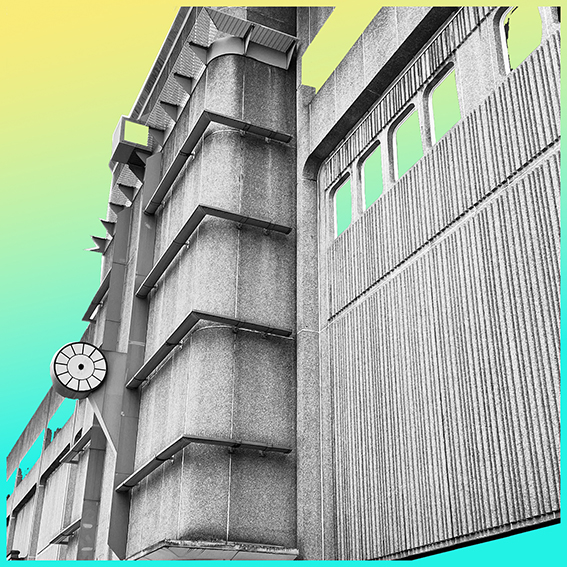
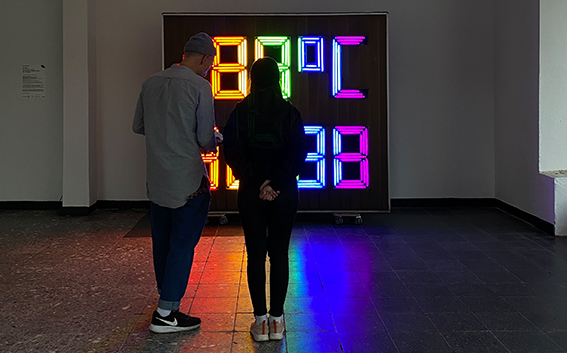
The work that provides the exhibition with its title is the “Stunde Null” digital clock. It was taken from the façade of an East German building at the Humboldt University in Berlin, where it had been turned off after the fall of the Berlin Wall when its equipment room ceased being maintained. The expression “zero hour” derives from the planning language of military and other organizations. In general, it indicates the decisive time at which a new chain of events begins to proceed, and was applied on May 8, 1945, in the earliest phase of the immediate post-war period in Germany. If the clock were not a digital clock, but rather had hands, it would mark the moment of the fall of the Wall and the “zero hour” of reunited Germany. Bernd Trasberger took the clock, which had fallen into disrepair, and preserved and restored it. All of the digits in the old housing now light up simultaneously and permanently in the colors of the rainbow, so as not only to offer the potential of all conceivable information, but also the entire color spectrum. In addition, the symbolism of rainbow colors, as employed in the contexts of Greenpeace, the hippie movement, and the gay rights movement, is thoroughly positive in connotation. The colors of the rainbow stand for tolerance, renewal, diversity, and optimism.
The work “Tabula Rasa” is inspired by an info board that Bernd Trasberger discovered while dismantling the clock at the Humboldt. The board originally had pieces of paper attached to it with magnets or transparent tape. The papers were all ripped off, leaving behind traces of transparent tape and paper. Here again, a situation arises that is open to new information. (Stunde Null) The surface is like a piece of paper that, although not written on, yet reveals traces of past information. Bernd Trasberger reproduces this empty info board aesthetic. Though the scraps of paper on the board formally seem to have been casually torn off, the remains of colored paper in fact have been carefully composed. The board reflects the space, the observer, and the neon light. The observer gazes into a metaphorical mirror of the past that breaks through and expands the patterned space.
The framed collages in the back gallery space are comprised of original blueprints for planned large-scale architectural projects from the 1970s that were never realized. Bernd Trasberger has reacted with shapes made from colored paper to these drawings of megastructures and urban visions.
Lena Brüning
review and interview in Dutch by Hans Kuiper